
How to Teach Kids Financial Literacy in 2026
Teach kids smart money habits with five printable worksheets — from needs vs. wants to taxes and debt — designed for Pre-K through high school.


First published January 26, 2021 at https://techiemamma.com/how-to-teach-kids-financial-literacy-in-2021/
This post may contain affiliate links, sponsored partnerships, and/or AI-assisted content. All content is developed by and subject to human review — AI is used only as an assisting tool. All views, opinions, and copyright are my own. I only recommend products and services I use and believe in. You can read my full disclosure policy here.

Money habits start early — and the sooner your kids understand the basics, the more prepared they'll be for the real world. Whether your little one is in Pre-K or your teen is headed toward their first job, there are simple ways to make financial literacy part of everyday life. What a better way to start the New Year than by teaching our children the best fiscal habits that helped us through an unprecedented time?
Start by thinking about the money habits that have helped you thrive. What did you wish someone had taught you sooner? Build your lessons around those topics — here are 6 ways to teach young kids about managing money to get you started. You can also explore free financial literacy resources from the FDIC for age-appropriate worksheets from Pre-K through high school.
Essential or Not?
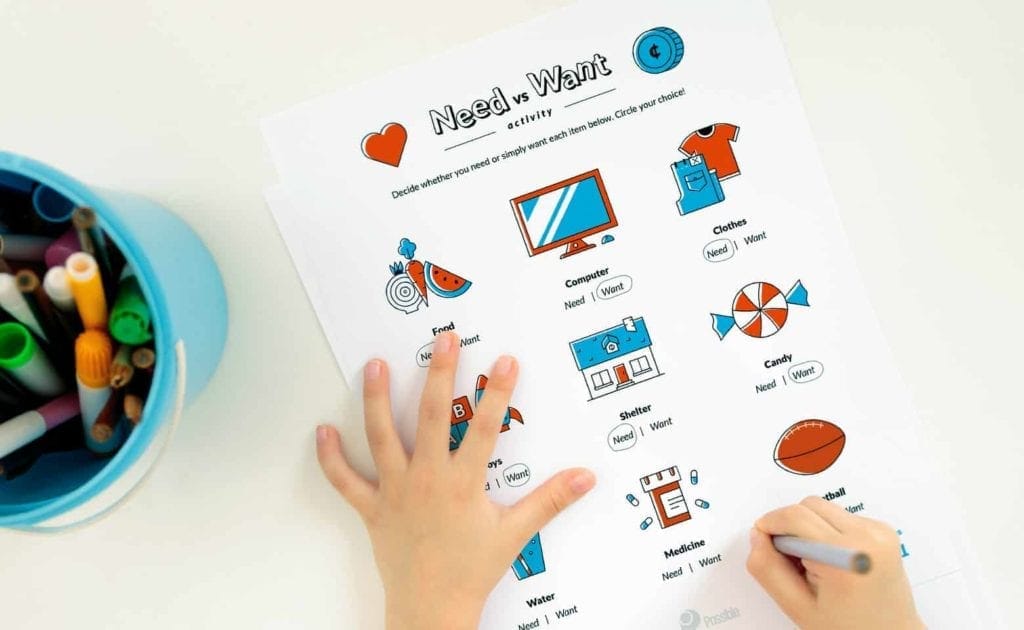
One of the easiest concepts to start with is the difference between needs and wants. Maybe you noticed your budget shifted when you stopped keeping up with the latest trends or eating out as often. Kids pick up on that. The sooner they can recognize what's essential versus what's a splurge, the more mindful they'll be about how they spend their money.
Download this Needs vs. Wants activity worksheet — a simple printable for kids to sort essentials from luxuries.
Tax, Interest, and Debt
For tweens and teens, it's time to talk about the less fun (but essential) side of money — taxes, interest, and debt. Whether they're gearing up for a summer job or heading into the workforce, a basic understanding of how these work can save them years of financial stress.
Sit down with a smart money basics guide and walk through real-world scenarios together. It doesn't have to be a formal lesson — even a conversation over dinner about how interest works on a credit card can make a difference.
Money conversations aren't always the most fun topics to discuss with your kids, but talking about the good, the bad, and everything in between helps them feel prepared — no matter their background. These lessons will become some of the most valuable things you teach them.